When most nurse practitioners (NPs) and physician assistants (PAs) think about career opportunities, they often focus on familiar paths such as family medicine, primary care, urgent care, or emergency medicine.
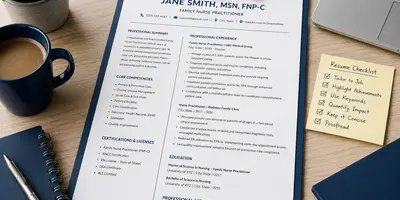
In today's competitive healthcare job market, your resume does far more than summarize your education and work history. For nurse practitioners, physician assistants, and other advanced practice providers, it serves as your first opportunity to demonstrate clinical expertise, professional value, and readiness for a new role.
Interviewing for a nurse practitioner (NP), physician assistant (PA), or other advanced practice provider (APP) position requires more than reviewing clinical guidelines and preparing for medical knowledge questions.
Whether you’re working double shifts in a cardiac unit or balancing telehealth appointments between conference calls, planning your career trajectory probably lands somewhere between “not today” and “ha, good one.”
Advanced practice providers (APPs) play an increasingly important role in today's healthcare system. As demand for care continues to grow, nurse practitioners (NPs), physician assistants (PAs), and other advanced practice clinicians are stepping into positions that extend beyond direct patient care...
Choosing a specialty is one of the most important career decisions nurse practitioners (NPs) and physician assistants (PAs) will make. While compensation is rarely the only factor influencing career satisfaction, specialty selection can have a significant impact on earning potential, job opportunities, work-life balance, and long-term professional growth.
When patients think about healthcare, they usually think about the appointment. They remember the conversation in the exam room, the physical examination, the diagnosis, and the treatment plan they carried home. From their perspective, the visit is the center of the healthcare experience.