Jun 26, 2025 ● APJ Staff Writer
What Top Medical Recruiters Want to See in Your Resume
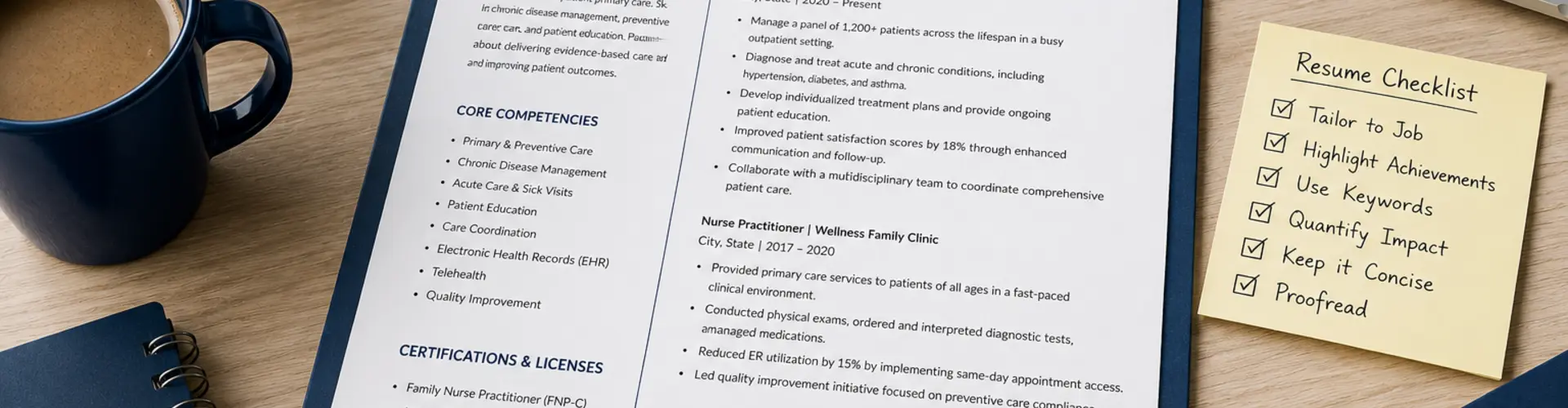
In today's competitive healthcare job market, your resume does far more than summarize your education and work history. For nurse practitioners, physician assistants, and other advanced practice providers, it serves as your first opportunity to demonstrate clinical expertise, professional value, and readiness for a new role.
The challenge is that recruiters often spend only a few seconds reviewing a resume before deciding whether to move a candidate forward. Before a human recruiter even sees your application, applicant tracking systems (ATS) may already have screened it for relevant keywords, certifications, and qualifications.
Many talented providers miss opportunities because their resumes fail to communicate their strengths effectively. They rely on generic descriptions, overlook measurable accomplishments, or submit the same resume for every position.
Understanding what recruiters actually look for can help you create a resume that stands out for the right reasons.
Why Your Resume Matters More Than Ever
Healthcare hiring has become increasingly specialized.
Employers are not simply looking for licensed providers. They want candidates who demonstrate the specific skills, experience, and clinical expertise required for a particular position.
A family nurse practitioner applying to a primary care practice will need to emphasize different strengths than a physician assistant pursuing a surgical subspecialty role. Likewise, a provider seeking an urgent care position should highlight different experiences than someone pursuing hospital medicine or behavioral health.
The strongest resumes show recruiters exactly how a candidate's background aligns with the needs of the organization.
Rather than functioning as a career history document, a modern healthcare resume should serve as a targeted marketing tool that clearly communicates your value.
The First Impression Happens Fast
Research consistently shows that recruiters spend only a few seconds reviewing a resume during an initial screening.
During that brief review, they are looking for answers to several key questions:
- Does this candidate meet the basic qualifications?
- Do they have relevant clinical experience?
- Are their certifications and licenses current?
- Does their background align with the position?
- Is the resume easy to read and professionally presented?
If recruiters cannot quickly find those answers, they often move on to the next application.
This is why organization and readability matter almost as much as content.
Create a Resume That Is Easy to Scan
A well-structured resume allows recruiters to identify important information immediately.
Simple formatting often performs better than highly designed templates. Clean section headings, consistent spacing, and readable fonts make it easier for both recruiters and applicant tracking systems to process your information.
Strong resumes typically include:
- Clear section headings
- Consistent formatting throughout
- Professional fonts such as Arial, Calibri, or Times New Roman
- Strategic use of white space
- Bullet points for achievements and responsibilities
- Reverse chronological work history
For most providers, one to two pages is sufficient. More experienced clinicians may require additional space, but every section should contribute meaningful value.
A cluttered resume can make even impressive qualifications difficult to find.
Lead With a Strong Professional Summary
Your professional summary is often the first section recruiters read, making it one of the most important parts of your resume.
Instead of using a generic objective statement, focus on communicating your experience, specialty expertise, and measurable accomplishments.
For example:
"Board-certified Family Nurse Practitioner with six years of outpatient primary care experience managing acute and chronic conditions. Experienced in preventive care, chronic disease management, and telehealth services. Recognized for improving patient satisfaction scores and supporting quality improvement initiatives."
A summary like this immediately tells recruiters who you are, what you do, and what value you bring.
Make Your Certifications and Licenses Easy to Find
In healthcare, certifications and licenses are not optional details. They are often among the first qualifications recruiters verify.
Include:
- Professional credentials
- Board certifications
- State licenses
- DEA registration if applicable
- Specialty certifications
- Relevant training programs
Make sure all information is current and presented clearly.
For advanced practice providers, credentials should be highly visible. Recruiters should never have to search for information that determines whether you qualify for the position.
Focus on Achievements, Not Job Duties
One of the most common resume mistakes is simply listing responsibilities.
Recruiters already know what nurse practitioners and physician assistants do. What they want to understand is how well you performed those responsibilities.
Compare these examples:
Less Effective:
"Provided patient care in a family medicine clinic."
More Effective:
"Managed a panel of more than 1,200 primary care patients while helping reduce emergency department utilization through expanded chronic disease management and preventive care initiatives."
The second example demonstrates scope, responsibility, and impact.
Whenever possible, quantify your accomplishments using:
- Patient volume
- Satisfaction scores
- Quality metrics
- Efficiency improvements
- Revenue generation
- Program development outcomes
Numbers help recruiters visualize your contribution and distinguish your experience from other applicants.
Highlight Skills That Show You Are Ready to Practice
Recruiters want evidence that you can step into a role and contribute immediately.
This means demonstrating both technical and interpersonal skills throughout your resume.
Clinical and Technical Skills
Depending on your specialty, examples may include:
- Chronic disease management
- Acute care assessment
- Diagnostic interpretation
- Medication management
- Telehealth delivery
- Procedural skills
- Electronic medical record systems
- Care coordination
- Preventive medicine
Rather than listing skills alone, show how you use them within your work experience.
Interpersonal Skills
Healthcare remains a team-based profession.
Recruiters consistently look for evidence of:
- Communication
- Collaboration
- Leadership
- Adaptability
- Critical thinking
- Time management
- Patient education
Strong interpersonal skills often separate good candidates from exceptional ones.
Tailor Your Resume for Every Position
One of the biggest mistakes healthcare professionals make is using the same resume for every application.
Recruiters can immediately tell when a resume has been customized for a role.
Review each job description carefully and identify:
- Required skills
- Preferred qualifications
- Specialty-specific experience
- Certifications
- Clinical competencies
Then incorporate relevant language throughout your resume.
For example, an orthopedic surgery position may emphasize procedural experience, postoperative care, and musculoskeletal assessment. An urgent care role may focus more heavily on acute illness management, triage, and diagnostic testing.
Tailoring your resume demonstrates genuine interest and improves your chances of passing ATS screening.
Understanding Applicant Tracking Systems
Most healthcare employers now use applicant tracking systems to help manage applications.
These systems scan resumes for keywords, qualifications, certifications, and job-related terminology before a recruiter reviews them.
If your resume lacks relevant keywords, it may never reach a human reviewer.
To improve ATS performance:
- Use terminology from the job description
- Include both acronyms and full terms
- Use standard section headings
- Avoid complex graphics and tables
- Maintain a simple format
- Save files in the requested format
The goal is not keyword stuffing. Instead, ensure your resume accurately reflects the language used by employers.
Common Resume Red Flags
Recruiters often notice certain issues immediately.
Some of the most common red flags include:
Generic Applications
A resume that appears identical for every position suggests limited interest in the role.
Excessive Errors
Typos, grammatical mistakes, and formatting inconsistencies may raise concerns about attention to detail.
Unexplained Employment Gaps
Career gaps are not necessarily disqualifying, but recruiters appreciate context when appropriate.
Duty-Focused Descriptions
Listing responsibilities without outcomes makes it difficult to understand your impact.
Overly Complex Design
Fancy graphics, columns, and tables may look attractive but can create problems for applicant tracking systems.
Professional simplicity usually performs better.
What Recruiters Love to See
When recruiters review strong healthcare resumes, several qualities consistently stand out:
- Clearly displayed credentials
- Specialty-specific experience
- Quantifiable accomplishments
- Strong clinical skills
- Professional presentation
- Evidence of leadership
- Quality improvement involvement
- Team collaboration
- Ongoing professional development
Most importantly, they want to see evidence that a candidate understands how their work contributes to patient outcomes and organizational success.
The Bottom Line
A strong healthcare resume does more than list qualifications. It tells a story about the value you bring as a clinician.
For nurse practitioners and physician assistants, that means highlighting measurable achievements, showcasing specialty expertise, demonstrating both technical and interpersonal skills, and tailoring your resume to the position you want.
Recruiters spend only seconds reviewing an application, but a well-crafted resume can quickly communicate what makes you stand out.
In a competitive healthcare job market, your resume is often your first opportunity to make a lasting impression. Make every section count.
Disclaimer: The viewpoint expressed in this article is the opinion of the author and is not necessarily the viewpoint of the owners or employees at Healthcare Staffing Innovations, LLC.