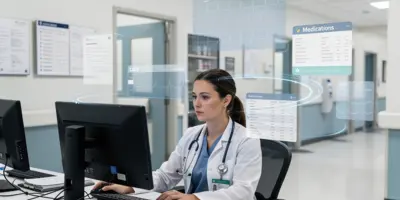
Advancement opportunities for nurse practitioners continue to expand as healthcare systems increasingly rely on advanced practice providers to meet patient demand.
Advanced Practice Providers (APPs) are experiencing some of the fastest workforce growth in healthcare—and remote patient monitoring (RPM) is one of the key forces accelerating that expansion.
For nurse practitioners and physician assistants, the job market has never been stronger. Demand continues to grow, opportunities are expanding across specialties, and compensation remains competitive.
Lists ranking the “best careers in America” consistently include nurse practitioners and physician assistants near the top—and increasingly, certified registered nurse anesthetists (CRNAs) as well.
Many nurse practitioner and physician assistant students hear the same message throughout training: healthcare needs more providers, jobs are everywhere, and finding work after graduation should not be difficult. Then graduation arrives, and the job search feels very different.
For many advanced practice providers, the formula for earning more seems straightforward: work more hours, see more patients, take on more responsibility.
Advanced practice providers have become essential to modern healthcare delivery. Nurse practitioners and physician assistants now practice across primary care, specialty medicine, emergency settings, and underserved communities, often serving as the most consistent point of care for patients.
Most healthcare professionals can recognize physical exhaustion. You know when you're tired. You know when you've worked too many hours, slept too little, or spent an entire shift moving from one crisis to the next. Decision fatigue is different.