Mar 26, 2025 ● APJ Staff Writer
Remote Physician and Advanced Practice Jobs: The Complete Guide to Virtual Practice Opportunities
Not long ago, remote healthcare jobs were viewed as a niche opportunity. Today, virtual care has become a permanent part of the healthcare landscape, creating new possibilities for physicians, nurse practitioners, physician assistants, and other advanced practice providers.
For some clinicians, remote work represents greater flexibility and improved work-life balance. For others, it offers an opportunity to reduce commuting, expand career options, or continue practicing in a way that better aligns with personal and professional goals.
At the same time, remote healthcare is not simply traditional medicine conducted over a video call. Virtual practice comes with unique challenges, different workflows, and a skill set that many clinicians never formally learned during training.
If you're considering a transition into telehealth or exploring remote opportunities for the first time, understanding what virtual practice actually looks like can help you determine whether it's the right fit for your career.
How Remote Healthcare Became Mainstream
The rapid expansion of telehealth during the COVID-19 pandemic introduced millions of patients and providers to virtual care. What began as a necessity quickly evolved into a viable care model for many specialties and patient populations.
Today, healthcare organizations increasingly view virtual care as a permanent component of patient access strategies. Patients appreciate the convenience, healthcare systems value the efficiency, and many clinicians enjoy the flexibility that remote work can provide.
As physician shortages continue in many parts of the country and healthcare organizations compete for clinical talent, remote opportunities have become an important recruitment and retention tool.
For advanced practice providers in particular, virtual care has created new ways to practice that simply did not exist a decade ago.
What Remote Healthcare Jobs Actually Look Like
One of the biggest misconceptions about telehealth is that every remote healthcare position looks the same.
In reality, virtual care encompasses a wide range of roles and responsibilities.
Some APPs spend their day conducting scheduled video visits with established patients. Others manage chronic conditions through a combination of virtual appointments, messaging platforms, and remote monitoring tools. Some work in urgent care environments, while others focus entirely on behavioral health, weight management, women's health, or specialty consultations.
Many telehealth providers maintain patient panels similar to traditional outpatient practices. The difference is that most interactions occur through video visits, secure messaging, phone consultations, or remote patient monitoring systems.
The clinical decision-making remains the same. The environment and communication methods are what change.
Which Specialties Translate Best to Virtual Care?
Not every specialty adapts equally well to remote practice.
Specialties that rely heavily on conversation, education, follow-up care, and medication management often transition smoothly to virtual settings.
Behavioral health has become one of the most established telehealth specialties. Psychiatric nurse practitioners, psychiatrists, therapists, and behavioral health clinicians frequently conduct comprehensive evaluations and ongoing treatment entirely through virtual platforms.
Primary care has also embraced telehealth for medication management, chronic disease follow-up, preventive care discussions, and routine patient check-ins.
Other specialties that often lend themselves well to remote practice include endocrinology, weight management, women's health, neurology, sleep medicine, and certain aspects of cardiology.
Specialties that depend heavily on procedures, imaging, physical examinations, or hands-on interventions typically have fewer fully remote opportunities. However, even many procedure-focused specialties now incorporate virtual follow-up visits and patient education into their workflows.
The question is often not whether a specialty can use telehealth, but how much of the care experience can reasonably occur remotely.
Why Many APPs Are Exploring Remote Practice
Flexibility is often the first reason clinicians begin exploring virtual opportunities.
Removing a daily commute can create additional time for family, exercise, professional development, or simply recovery between workdays. For APPs who live in rural areas or regions with limited healthcare employers, remote work may also expand access to career opportunities that would otherwise require relocation.
Many clinicians appreciate the ability to practice from home while maintaining meaningful patient relationships. Others value the opportunity to work with patients across broader geographic areas or focus on a specific clinical niche.
For some providers, telehealth offers a pathway to remain clinically active while accommodating changing personal circumstances, caregiving responsibilities, or semi-retirement plans.
The appeal is not simply working from home. It is gaining greater control over how and where work fits into life.
The Tradeoffs Nobody Talks About
Remote practice has advantages, but it is not a perfect solution.
Many clinicians are surprised by how mentally demanding virtual care can be. Spending hours in video visits requires a different type of concentration than in-person practice. Screen fatigue is real, and some providers find themselves feeling more drained than expected.
Professional isolation can also become a challenge.
In traditional clinical settings, conversations with colleagues happen naturally throughout the day. Informal collaboration, mentorship, and team interaction often require more intentional effort in remote environments.
Some clinicians also miss the hands-on aspects of patient care. Physical examinations, procedures, and face-to-face interactions are difficult to replace entirely.
Technology can create frustration as well. Connectivity issues, software problems, and patient technology challenges occasionally disrupt even the most organized virtual practices.
The providers who thrive in telehealth tend to understand both the benefits and limitations of the model before making the transition.
What Employers Look for in Remote Providers
Many APPs assume that remote positions are ideal entry-level opportunities. In reality, most employers prefer clinicians who already possess a solid foundation of independent clinical experience.
Virtual providers often have fewer opportunities to ask colleagues questions in real time or perform additional assessments in person. As a result, employers frequently seek candidates who are comfortable making clinical decisions, managing patient encounters efficiently, and working independently.
Strong communication skills become particularly important in virtual settings. Because clinicians rely heavily on conversation rather than physical examination, listening carefully, building rapport quickly, and explaining complex information clearly become essential skills.
Employers also value providers who are adaptable, organized, and comfortable learning new technology platforms.
Clinical expertise remains important, but success in remote practice often depends just as much on communication and workflow management.
Building Your First Remote Opportunity
For APPs interested in telehealth, the best path is often through specialty expertise.
A provider with several years of experience in psychiatry, primary care, endocrinology, weight management, or women's health may find significantly more opportunities than a new graduate seeking fully remote work.
Networking can also play a major role. Many telehealth opportunities are filled through professional connections, specialty organizations, and referrals before they ever appear on public job boards.
Obtaining additional state licenses can expand opportunities as well. Organizations serving patients across multiple states often prioritize clinicians who can practice in several jurisdictions.
Perhaps most importantly, gaining experience with virtual care workflows—even within a traditional practice—can strengthen future applications.
Many clinicians enter remote practice gradually rather than making an immediate full-time transition.
Is Remote Practice Right for You?
The answer depends largely on your personality, professional goals, and preferred work environment.
Some APPs thrive in remote settings. They appreciate the autonomy, flexibility, and efficiency of virtual care. They enjoy focused patient interactions and the ability to structure their workdays with fewer interruptions.
Others find they miss the energy of clinical teams, the pace of in-person care, or the personal connection that comes from seeing patients face-to-face.
Neither preference is right or wrong.
The key is understanding how you work best and choosing a practice environment that supports both your professional success and personal well-being.
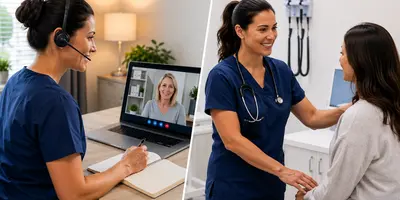
For many clinicians, the ideal solution may ultimately be a hybrid model that combines virtual and in-person care.
The Future of Virtual Practice
Remote healthcare is no longer a temporary trend.
Healthcare organizations continue investing in virtual care infrastructure, patients increasingly expect telehealth options, and providers are becoming more comfortable delivering care through digital platforms.
As technology continues to improve, virtual care will likely become more integrated into everyday healthcare delivery rather than existing as a separate service line.
For physicians and advanced practice providers, this means telehealth skills are becoming increasingly valuable regardless of whether remote practice becomes a full-time career path.
Understanding virtual care is no longer simply an advantage. It is becoming an important part of modern clinical practice.
Frequently Asked Questions
Can nurse practitioners and physician assistants work fully remote?
Yes. Many telehealth organizations hire nurse practitioners and physician assistants for fully remote positions, particularly in specialties such as behavioral health, primary care, weight management, and chronic disease management.
Do remote healthcare jobs pay less?
Compensation varies by specialty, employer, and productivity model. Some remote positions may offer slightly lower salaries, while others provide compensation comparable to traditional clinical roles. Many clinicians find the flexibility benefits offset minor salary differences.
Are remote healthcare jobs good for new graduates?
Most fully remote positions prefer clinicians with some independent practice experience. New graduates may benefit from gaining in-person clinical experience before transitioning into telehealth.
What specialties have the most remote opportunities?
Behavioral health, primary care, endocrinology, weight management, women's health, sleep medicine, and certain specialty follow-up services often offer strong remote opportunities.
Do I need multiple state licenses to work remotely?
Not always, but additional state licenses can significantly expand your opportunities and make you more attractive to telehealth employers.
Is telehealth likely to remain a long-term career option?
Yes. Virtual care has become a permanent component of healthcare delivery and is expected to remain an important part of patient care moving forward.
Final Thoughts
Remote healthcare has created new opportunities for physicians and advanced practice providers to build careers that offer flexibility, autonomy, and geographic freedom.
For the right clinician, telehealth can provide a rewarding way to continue delivering high-quality care while enjoying a different approach to practice. Like any career path, however, success requires understanding both the opportunities and the tradeoffs.
The most successful virtual providers are not necessarily those looking for an easier job. They are clinicians who understand how remote care works, embrace new ways of connecting with patients, and intentionally choose a practice model that aligns with their strengths and goals.
Disclaimer: The viewpoint expressed in this article is the opinion of the author and is not necessarily the viewpoint of the owners or employees at Healthcare Staffing Innovations, LLC.