Aug 21, 2026 ● APJ Staff Writer
From Clinician to Creator: How APPs Can Build Influence on Social Media Without Compromising Their Credibility
Social media has given advanced practice providers a way to connect with audiences far beyond the patients and colleagues they encounter in their daily work. An NP might explain a complicated health topic in a short video, while a PA shares insight into working in a particular specialty. Another APP might make a funny video about charting, prior authorizations, patient portal messages, or one of the countless frustrations that only someone working in healthcare truly understands.
Some of the most engaging clinician accounts aren't built around health education at all. They're funny, relatable, and rooted in the shared experience of working in healthcare. A skit about an impossible EHR workflow or the realities of a hectic clinic day can create an immediate connection with thousands of nurses, APPs, physicians, and other healthcare professionals who recognize themselves in the joke. For some clinicians, posting this kind of content is simply a creative outlet or a way to connect with people who understand their work.
But an audience can grow whether or not building one was the original goal. A clinician who starts posting healthcare humor for fun may eventually attract tens of thousands of followers. Someone who enjoys explaining difficult medical concepts may discover that patients and clinicians regularly seek out their content. What began casually can gradually become a recognizable public platform, bringing opportunities for speaking, writing, teaching, podcast appearances, consulting, professional networking, industry collaborations, or paid brand partnerships.
There is nothing inherently problematic about an APP becoming a content creator or earning money from an audience they have built. Clinicians bring something particularly valuable to social media: real clinical experience and an understanding of healthcare that can make their content educational, insightful, or simply very funny. However, APPs also enter the creator economy with something most influencers don't have—a professional credential that can significantly affect how an audience interprets what they say.
An NP recommending a skincare product may not be heard in the same way as a lifestyle creator recommending that product. A PA discussing a treatment option carries professional authority even if the post is intended only as general education. An APP making a joke about an encounter at work may intend it for fellow clinicians who immediately understand the humor, while patients or employers encountering the same post may interpret it very differently.
That credibility is one of the greatest advantages clinicians have online, but it also introduces questions about privacy, professional boundaries, health claims, sponsorship disclosures, employer policies, and the line between sharing information and providing individualized medical advice. Professional organizations already recognize many of these issues. Nursing guidance emphasizes maintaining professionalism, protecting patient privacy, following employer social-media policies, and sharing credible information. AAPA similarly cautions PAs about discussing patients online and reminds clinicians that once information is posted, they may lose control over who sees it and how long it remains available.
None of this means APPs should avoid becoming creators. Social media can provide clinicians with a remarkable opportunity to educate, entertain, connect with their professions, build communities, establish expertise, and create entirely new career opportunities. The more useful question is how APPs can take advantage of those possibilities while protecting the credibility that made people interested in their perspective in the first place.
You Don't Need a Million Followers to Build Professional Influence
Social media success doesn't have to mean enormous follower counts, viral videos, sponsored posts, or turning content creation into a second career. Those are legitimate goals for some APPs, but professional influence can take many different forms.
A cardiology NP might build a relatively small following by discussing new research and clinical practice. An orthopedic PA might become known among other clinicians for thoughtful sports medicine content. Another APP may build an audience primarily by being funny and relatable, creating videos about the everyday frustrations and absurdities of healthcare that resonate with people across the profession.
Those audiences may look very different, but each can have professional value. Followers might include colleagues, healthcare leaders, conference organizers, educators, recruiters, journalists, researchers, and companies working within the clinician's specialty. That visibility can lead to speaking engagements, publication opportunities, podcast appearances, teaching, professional committee work, consulting, or advisory roles. It can also make it easier to develop professional relationships beyond an APP's immediate workplace.
Professional organizations recognize some of these benefits. The American Nurses Association notes that social media can support professional networking and education, increase nursing's visibility, and provide a platform for disseminating health and safety information.
This is why follower count alone is a poor measure of professional influence. An APP with 5,000 highly engaged followers in a particular specialty may have more meaningful professional reach than someone with a much larger but less relevant audience. The more useful question isn't simply how many people are following, but who is listening and what that visibility is beginning to make possible.
What Are You Building—and Who Is Listening?
Not every APP starts posting with a strategy. Some deliberately set out to educate patients or establish expertise in a specialty. Others want to advocate for their profession, talk about healthcare policy, connect with colleagues, or create a professional presence outside their employer. Plenty of clinicians start posting simply because they enjoy making people laugh or want a place to talk about experiences other healthcare professionals understand.
Once an audience begins to develop, however, it becomes useful to think more intentionally about what the account is becoming. An APP interested in professional visibility may care more about reaching clinicians, healthcare leaders, professional associations, and industry contacts than maximizing total followers. Someone focused on patient education may prioritize accessible explanations of evidence-based information. A creator known for healthcare humor may want to preserve that personality while deciding how much of their real workplace, colleagues, or clinical experiences should become material for content.
For APPs interested in monetization, another set of decisions eventually emerges. A clinician may be comfortable earning revenue from the platform itself but uninterested in sponsorships. Someone else may welcome partnerships with healthcare or consumer brands within a particular area of expertise. Another may discover that the most valuable opportunities created by an audience aren't advertisements at all, but consulting, speaking, teaching, writing, or advisory work.
Goals can change as an audience grows. An NP may begin posting educational videos because she enjoys teaching and later discover that organizations want her as a clinical educator or consultant. A PA whose specialty content develops a following may receive invitations to speak at conferences. A clinician who began making funny videos after difficult shifts may unexpectedly build a community large enough that content creation becomes a meaningful side business.
The important shift comes when a casual account develops enough visibility that the clinician begins to recognize it as a public platform rather than simply a conversation among friends. At that point, it helps to consider who you are trying to reach, what you want people to associate with your name and credentials, and what opportunities you would actually welcome if the audience continues to grow. Those questions don't require turning every post into a calculated career move; they simply provide some direction for what the platform is becoming.
Your Credential Follows You Online
Clinical credentials convey expertise. In an online environment filled with health information from people with widely varying qualifications, seeing NP, DNP, PA-C, or another clinical credential beside someone's name can immediately influence how viewers interpret what they're hearing—even when the content itself is casual.
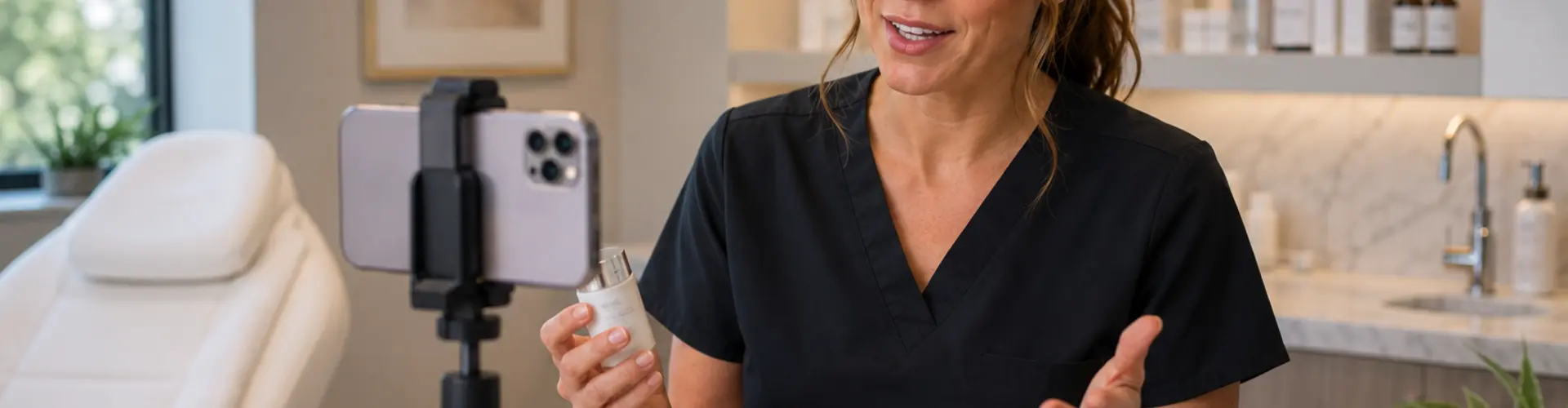
A dermatology NP recommending a skincare product may intend to share nothing more than a personal favorite, but followers who know her specialty may give the recommendation additional weight. A PA discussing a treatment may be providing general education, while viewers interpret the information as guidance they can apply to their own medical situation. Even a clinician whose account consists largely of comedy may discover that followers begin asking health questions simply because they know the person behind the jokes is a medical professional.
Commercial relationships make the distinction especially important. Suppose a skincare company sends a dermatology NP a new product for free. She tries it, genuinely likes it, and wants to tell her audience about it. Sharing that experience isn't inherently inappropriate, and neither is accepting compensation for creating content. But if the product was free, the company paid for the post, an affiliate commission is available, or another material relationship exists, Federal Trade Commission guidance may require that connection to be disclosed clearly.
The FTC advises influencers to make disclosures difficult to miss and place them with the endorsement itself rather than relying on a profile page or burying them among hashtags. Its guidance also addresses health claims and expert endorsements, which becomes particularly relevant when someone's clinical qualifications are part of why an audience trusts the recommendation.
Sponsorships and affiliate relationships don't automatically need to be off limits. Clinical expertise has genuine commercial value, and healthcare professionals can be excellent educators, consultants, spokespeople, and brand partners. The more important issue is understanding that professional credibility is part of the transaction. Before accepting a commercial opportunity, it may be worth asking: Would I still be comfortable putting my professional name and credentials behind this product, company, or claim if there were no payment involved?
Healthcare Humor Can Build Community—But the Audience Is Bigger Than the Break Room
Humor has always been part of healthcare culture. Clinicians work in environments that can be stressful, frustrating, unpredictable, emotionally difficult, and occasionally absurd. Joking with colleagues can relieve tension, create camaraderie, and provide a way to process experiences with people who understand them. Social media has simply taken that shared language and given it an enormous audience.
A video about spending half a shift fighting with the EHR, another prior authorization request, an impossible schedule, or the strange logic of a hospital policy can make thousands of healthcare professionals laugh because they've lived some version of the same experience. Specialty stereotypes and “things only healthcare workers understand” videos can create a similar sense of community.
The complication is that social media doesn't keep the joke inside the break room. Patients, family members, employers, coworkers, professional organizations, and people with no healthcare background may all encounter the same content. That matters most when humor shifts from joking about working in healthcare to joking about the people receiving healthcare. A fictional skit about an impossible EHR workflow is very different from retelling an unusual patient encounter for laughs.
There is also a reputational issue separate from whether a post technically violates a privacy rule. A clinician may find a joke obviously exaggerated or satirical, while a patient encountering the video without that context may wonder whether clinicians make fun of people like them after they leave the room. Similarly, a joke about another healthcare profession may feel like friendly occupational rivalry to insiders but appear dismissive or hostile to everyone else.
APP creators don't have to become humorless or sanitize every observation about healthcare. The best clinician comedy often works precisely because it captures genuinely familiar experiences without needing an identifiable patient to be the punch line. A useful test is to imagine the post reaching a different audience than the one intended: If one of your patients, your employer, or a future colleague saw this without knowing you personally, what would it tell them about how you view the people you care for and work alongside?
Patient Stories Are More Complicated Than Removing a Name
Patient encounters provide clinicians with an endless supply of stories. They can be funny, heartbreaking, surprising, frustrating, and educational, which makes them tempting material for social media. An unusual case may seem like the perfect way to teach followers about a condition, while a memorable interaction can illustrate a larger point about healthcare in a way that a textbook explanation cannot.
For an APP creator, however, changing a patient's name or leaving it out entirely doesn't necessarily make a real encounter appropriate to share. AAPA's ethical guidance advises PAs not to discuss patients online or post patient photographs, even when a patient appears only incidentally in an image. Nursing guidance similarly emphasizes that privacy and confidentiality obligations extend into digital environments.
HIPAA adds legal requirements, but the issue shouldn't be reduced to “Is this a HIPAA violation?” HHS has formal standards for when protected health information is considered de-identified, and information that seems anonymous to a broad audience may still become recognizable when combined with details known by a patient's family, coworkers, or community.
There are professional and reputational considerations beyond HIPAA as well. An APP can avoid using a patient's name and still create content that the patient recognizes as being about them. Even when a story is intended to educate rather than embarrass, that patient may have a very different reaction to discovering that an experience they considered private has become content for thousands of strangers.
Fictional scenarios and general patterns can often accomplish the same educational goal without turning an individual encounter into material. An APP can explain that patients frequently misunderstand a particular medication, for example, without recreating a recognizable conversation with one specific patient. For clinicians building audiences, patient trust is ultimately more valuable than a compelling story.
When Followers Start Asking You for Medical Advice
An APP who consistently posts useful health information will eventually encounter one of social media's most predictable responses: followers begin asking about themselves. A general post about migraines can produce a comment describing someone's headaches and asking whether they should be worried. A psychiatric NP may receive a private message asking whether a follower should stop taking a medication. A dermatology PA might receive photographs from strangers asking whether something looks like cancer.
This is where the distinction between health education and individualized medical advice becomes increasingly important. APP creators can educate audiences about symptoms, conditions, treatments, prevention, and questions people may want to discuss with their own clinicians. But a social-media account is not automatically an appropriate environment for assessing an individual, reviewing a medical history, establishing the professional relationship required for care, or managing urgent concerns.
A disclaimer stating that content is “for educational purposes only” can help communicate intent, but it shouldn't be treated as a magical shield that makes every interaction appropriate. What the clinician actually says and does matters more than a sentence in a profile.
Creators therefore benefit from deciding in advance how they will handle these requests. Rather than diagnosing a commenter, an APP can explain that they can't evaluate individual symptoms through social media and encourage appropriate medical evaluation. The question itself may still inspire useful future content about when a symptom warrants attention or what patients should discuss with their own clinicians. That allows the creator to remain helpful without turning a comment section or direct-message inbox into an informal clinic.
Your Workplace Is Not a Content Studio
The popularity of “day in my life” videos has made healthcare workplaces increasingly visible online. Showing a clinician arriving for a shift, walking through a hallway, or preparing a workstation can make clinical life feel accessible and authentic, but healthcare environments contain information creators may not notice until after something has been posted.
A patient can walk through the background. A name may be visible on a door, computer monitor, whiteboard, wristband, chart, or piece of paperwork. A conversation can be captured by a microphone, and a coworker may appear on camera without expecting to become part of someone's public content.
HHS guidance addressing media and filming in healthcare facilities illustrates how seriously patient information in clinical environments must be treated. It explains that healthcare providers generally cannot permit filming in treatment areas where protected health information is accessible without appropriate prior authorization; simply blurring or masking patient identities afterward does not solve the underlying access problem. The rules governing an individual employee's social-media video will depend on the circumstances, but the broader lesson is useful: the background matters just as much as the person holding the camera.
Employer policies matter too. A health system may have rules governing photography, filming on its property, use of logos or uniforms, references to the organization, outside business activities, sponsored content, or employees speaking publicly about their work. An APP who wants to create workplace content should understand those rules before filming rather than after a post attracts attention. A funny skit recorded at home can communicate the realities of clinical work without capturing a patient, colleague, computer screen, or employer logo in the background.
When Brands Come Calling
For many creators, the first brand email feels like a milestone. Someone has noticed the audience they've built and is willing to pay for access to it. For an APP creating content outside regular clinical hours, compensation can also validate that the time and expertise involved have real value.
FTC disclosure rules are an important starting point. A material connection to a brand can include payment, free or discounted products, and other benefits, and disclosures should appear where audiences are likely to notice them. For video endorsements, FTC guidance says disclosure should be in the video rather than relying only on the description, while live-stream disclosures may need to be repeated so viewers who join later encounter them.
For health products, what the creator says matters just as much as whether the sponsorship is disclosed. An honest testimonial does not, by itself, substantiate a health claim. Saying that you personally like the texture of a moisturizer is different from saying it treats a dermatologic condition. Talking about your experience using a fitness device is different from claiming it prevents disease. A company providing suggested talking points doesn't relieve a clinician of responsibility for considering whether the claims they're attaching to their credentials are supportable.
Before accepting a partnership, an APP may want to look beyond the fee and consider what the company sells, what claims it expects the creator to make, whether the relationship fits the clinician's expertise, and whether the creator will retain enough control to communicate accurately. A lucrative partnership that causes an audience to question every future recommendation may ultimately cost more than it pays.
Your Employer May Have a Say Even When You're Off the Clock
One of the appealing things about becoming a creator is that the platform belongs to the individual rather than the employer. An APP can develop an audience, reputation, and professional identity that travels from one job to another, but that doesn't make the employer irrelevant.
A clinician's social-media bio may identify where they work. Videos may show an employer's logo or facility. Followers may associate an APP's opinions with the organization even when the clinician states that those opinions are personal. Paid partnerships may also intersect with employer conflict-of-interest or outside-employment policies.
APPs shouldn't assume that what a colleague does at another organization is automatically acceptable at their own. Policies, employment agreements, state requirements, professional expectations, and rules surrounding outside activities can differ. Before an account becomes commercially significant, it is worth reviewing relevant social-media, confidentiality, conflict-of-interest, intellectual-property, outside-employment, and media policies. APPs receiving substantial compensation or entering contracts may also want appropriate legal or tax advice.
The point isn't to ask an employer for permission to have a personality online. It's to understand where a personal creator business begins to intersect with professional obligations. It's also worth remembering that the audience for a public post may eventually include people you never intended to reach—a patient, future employer, professional colleague, licensing board, or someone encountering the content completely outside its original context. That doesn't mean every post must be professionally sanitized; it simply means public content can travel much farther than a creator imagines when pressing “post.”
From Creator to Professional Influence
APPs don't need social media to build successful careers, and becoming an influencer certainly isn't a new requirement for professional advancement. But social platforms have created something previous generations of clinicians largely didn't have: the ability to develop a professional voice and audience independently of an employer, institution, or traditional media outlet.
Some APPs will use that opportunity primarily to teach. Others will advocate for their professions, share specialty expertise, build communities, or make exhausted healthcare workers laugh after a difficult shift. Some will develop substantial audiences and profitable creator businesses, and many will combine several of those roles over time.
The reason people listen matters. Followers may enjoy an APP's personality or humor, but clinical credentials can add a layer of trust that ordinary creators don't automatically possess. Protecting that trust doesn't require avoiding sponsorships, comedy, strong opinions, or commercial opportunities. It means recognizing when professional authority is part of what gives the content its influence.
For APPs considering a more public presence, success doesn't have to be measured by whether they ever become an “influencer.” A smaller, credible platform can lead to relationships and opportunities that meaningfully change a career, while a large entertainment-focused audience can develop into something its creator never anticipated.
The goal doesn't have to be becoming an influencer. It can be becoming influential—and understanding how to use that influence without losing the credibility that made it possible.
References
American Academy of Physician Associates (AAPA). Ethical Guidelines for the PA Profession.
Supports the sections on PA professionalism, patient confidentiality, discussing patients online, and posting patient images.
AAPA – Ethical Guidelines for the PA Profession
American Nurses Association (ANA). Social Media Do’s and Don’ts for Nurses.
Useful for patient confidentiality, social-media professionalism, employer policies, and the risks of sharing patient stories even when names aren't included.
ANA – Social Media Do’s and Don’ts for Nurses
American Nurses Association (ANA). Privacy and Confidentiality.
Supports the broader discussion of nurses' professional duty to maintain privacy and confidentiality in social media and other digital environments.
ANA – Privacy and Confidentiality
U.S. Department of Health and Human Services (HHS), Office for Civil Rights. Guidance Regarding Methods for De-identification of Protected Health Information.
This is the strongest source for our point that simply removing a patient's name doesn't necessarily mean health information has been properly de-identified. HHS explains both the Safe Harbor and Expert Determination methods and the identifiers that must be considered.
HHS – Guidance on De-identification of Protected Health Information
Federal Trade Commission (FTC). Disclosures 101 for Social Media Influencers.
This directly supports the sections about paid partnerships, free products, affiliate relationships, material connections, and making sponsorship disclosures obvious rather than burying them in a profile or among hashtags. It also specifically addresses disclosures in videos and livestreams.
FTC – Disclosures 101 for Social Media Influencers
Federal Trade Commission (FTC). Health Products Compliance Guidance.
This is important for the sections about APPs endorsing healthcare, wellness, skincare, or other health-related products. It supports our distinction between sharing personal experience and making health claims that require substantiation, as well as the additional considerations surrounding expert endorsers.
FTC – Health Products Compliance Guidance
American Academy of Physician Associates (AAPA). Considerations for Aspiring PA Entrepreneurs.
This one supports the career-development side of our article rather than the compliance side. AAPA discusses growing interest in PA-owned businesses—including consulting—and the professional, legal, and business considerations that come with entrepreneurship.
AAPA – Considerations for Aspiring PA Entrepreneurs
U.S. Department of Health and Human Services (HHS), Office for Civil Rights. Can Health Care Providers Invite or Arrange for Members of the Media, Including Film Crews, to Enter Treatment Areas of Their Facilities Without Prior Written Authorization?
Supports the section on filming in healthcare workplaces, access to protected health information, patient authorization, and why blurring or masking a patient's identity after filming does not resolve unauthorized access to PHI.
HHS – Film and Media Access to Protected Health Information
Disclaimer: The viewpoint expressed in this article is the opinion of the author and is not necessarily the viewpoint of the owners or employees at Healthcare Staffing Innovations, LLC.