Jun 24, 2026 ● APJ Staff Writer
Choosing an APP Specialty: How to Balance Demand, Compensation, Lifestyle, and Long-Term Satisfaction
Ask a group of experienced nurse practitioners and physician assistants what they wish they had known earlier in their careers, and many will give a surprisingly similar answer: choosing a specialty is about much more than finding the highest-paying job.
Early in a career, it's easy to focus on salary surveys, hiring trends, and lists of "in-demand" specialties. Those factors certainly matter. Compensation influences financial stability, job demand affects opportunity, and workforce trends can shape long-term prospects.
But after years in practice, many APPs discover that the most important factors are often harder to measure. Schedule flexibility, workplace culture, autonomy, patient relationships, leadership support, and overall quality of life frequently play a much larger role in long-term career satisfaction than many clinicians expect.
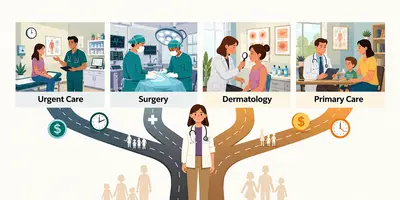
Choosing a specialty is one of the most significant professional decisions an APP will make. The good news is that there is rarely one perfect choice. The challenge lies in understanding which tradeoffs fit your goals, personality, and vision for the future.
The Specialty You Choose Shapes More Than Your Clinical Practice
Most APPs understand that different specialties involve different patient populations and clinical responsibilities. What is less obvious early on is how deeply specialty choice can influence everyday life.
A provider working in psychiatry may spend most of the day building long-term therapeutic relationships, managing medications, and helping patients navigate complex behavioral health challenges. A surgical APP may split time between the operating room, inpatient rounds, and postoperative care. Emergency medicine offers constant variety and rapid decision-making, while outpatient specialties often provide more predictable schedules and continuity of care.
Over time, those differences affect far more than clinical skills. They influence work-life balance, earning potential, professional growth opportunities, and even where an APP can realistically live and work.
This is why specialty selection deserves more consideration than simply following the strongest job market or the highest salary offer.
Why Demand Doesn't Tell the Whole Story
Healthcare workforce shortages have created strong demand in several specialties, particularly psychiatry, primary care, geriatrics, oncology, and certain surgical fields.
On the surface, it seems logical to pursue whichever specialty offers the greatest number of opportunities. Demand can certainly provide job security and negotiating leverage, but it doesn't necessarily predict career satisfaction.
Consider psychiatry. Many APPs are attracted to the specialty because of strong demand, expanding telehealth opportunities, and increasing autonomy. For the right clinician, it can be an incredibly rewarding career. At the same time, the work requires emotional resilience, comfort with complex mental health conditions, and an interest in long-term therapeutic relationships.
The same principle applies across healthcare. Oncology offers meaningful patient connections and advanced clinical practice, but also requires supporting patients through some of the most difficult moments of their lives. Emergency medicine delivers excitement and variety, but the pace and unpredictability can be challenging for clinicians who prefer structure and continuity.
Every specialty has advantages. Every specialty has challenges. The goal is not to find a field without tradeoffs but to identify which tradeoffs align best with your strengths and interests.
The Questions Many APPs Wish They Had Asked Earlier
When evaluating specialties, compensation and demand often dominate the conversation. Yet many experienced APPs eventually realize there were other questions worth asking from the beginning.
What type of patient interactions do you enjoy most?
Do you prefer solving acute problems or managing chronic conditions over time?
Would you rather work in a fast-paced environment where every day feels different, or in a setting that allows for deeper patient relationships and more predictable workflows?
How important is schedule flexibility?
Do you enjoy procedures?
Would you be comfortable taking call?
These questions may seem simple, but they often reveal more about long-term fit than salary data ever could.
A specialty that looks attractive on paper can feel very different once the daily realities become clear. Conversely, some APPs discover tremendous satisfaction in specialties they had never seriously considered during training.
Understanding What Different Specialties Actually Offer
One of the challenges facing APPs is that specialty descriptions rarely capture the realities of day-to-day practice.
Primary care remains one of the most influential and versatile specialties in healthcare. Providers develop long-term relationships with patients while managing a wide variety of conditions. The work can be deeply rewarding, though it often comes with administrative demands and growing patient panels.
Psychiatry continues to attract clinicians seeking meaningful patient interactions and increasing telehealth opportunities. Success in the specialty often depends on strong communication skills, patience, and an interest in behavioral health.
Emergency medicine appeals to providers who enjoy rapid decision-making, variety, and high-acuity care. Many APPs appreciate the shift-based schedule, although the pace can be demanding over time.
Oncology offers opportunities to build lasting patient relationships while practicing highly specialized medicine. Providers often become deeply involved in patient care journeys that extend well beyond diagnosis and treatment.
Geriatrics continues to grow as healthcare systems adapt to an aging population. APPs in this field frequently coordinate complex care plans and manage multiple chronic conditions while helping patients maintain quality of life.
Surgical specialties attract clinicians who enjoy procedures, teamwork, and hands-on medicine. The work often combines inpatient care, outpatient management, and operating room responsibilities.
None of these specialties is inherently better than another. The question is which environment allows you to do your best work while maintaining professional fulfillment.
Career Priorities Change as APPs Gain Experience
Another reality many clinicians don't fully appreciate early in their careers is that professional priorities evolve.
A new graduate may prioritize mentorship, exposure to complex cases, and opportunities to develop clinical confidence. Five or ten years later, that same provider may place greater value on schedule flexibility, leadership opportunities, compensation growth, or reduced call responsibilities.
Some APPs eventually transition into administrative leadership. Others pursue teaching, consulting, telehealth, research, or specialty practice. What feels important at age 28 may not be what matters most at age 48.
Because careers evolve, specialty decisions should not be viewed as permanent commitments. Many successful APPs change specialties, pursue additional training, or reshape their careers as their goals and interests change.
The most successful careers often reflect thoughtful adaptation rather than rigid planning.
Workplace Culture Often Matters More Than Specialty
One of the most consistent themes that emerges when experienced APPs discuss career satisfaction is the importance of workplace culture.
A supportive physician partner, collaborative team, strong leadership, and reasonable workload can dramatically improve job satisfaction regardless of specialty. Conversely, even a highly desirable specialty can become frustrating in an unhealthy work environment.
This is one reason why two APPs working in the same field may report completely different experiences.
When evaluating opportunities, clinicians often focus heavily on the specialty itself while overlooking factors such as onboarding support, organizational culture, staffing levels, and leadership philosophy. In reality, those elements frequently have just as much influence on long-term happiness.
Building a Career, Not Just Choosing a Specialty
The most satisfying APP careers are rarely built around a single decision.
Instead, they develop through a series of thoughtful choices made over time. Specialty selection is one of those choices, but it is only part of a larger professional journey.
The APPs who thrive over the long term tend to remain curious, open to change, and willing to reassess their goals as their careers evolve. They understand that success is not measured solely by compensation or prestige. It is also reflected in professional fulfillment, meaningful patient relationships, personal well-being, and the ability to continue enjoying clinical practice year after year.
Choosing a specialty is important, but building a sustainable and rewarding career requires a broader perspective.
Frequently Asked Questions
Should APPs choose a specialty based primarily on salary?
Compensation should absolutely be part of the decision-making process, but it rarely predicts long-term satisfaction by itself. Lifestyle, workplace culture, patient population, autonomy, and schedule often become equally important factors over time.
Is it common for APPs to change specialties?
Yes. Many nurse practitioners and physician assistants transition into different specialties throughout their careers. Additional training and onboarding may be required, but specialty changes are relatively common.
Which APP specialties offer the best work-life balance?
The answer depends heavily on the employer and practice setting. However, many APPs find psychiatry, dermatology, outpatient specialty care, and certain telehealth roles offer greater schedule predictability.
How important is demand when choosing a specialty?
Demand can create opportunities and improve job security, but it should be considered alongside personal interests, lifestyle preferences, and long-term career goals.
What factor contributes most to APP career satisfaction?
While specialty matters, many experienced APPs point to workplace culture, supportive colleagues, leadership quality, and autonomy as equally important contributors to career satisfaction.
Final Thoughts
The healthcare landscape will continue to evolve. New specialties will emerge, workforce shortages will shift, and compensation trends will change.
What tends to matter most over the long term is whether your specialty allows you to practice in a way that aligns with your strengths, interests, and priorities. Demand and earning potential deserve consideration, but they are only part of the equation.
The APPs who build the most satisfying careers are often those who look beyond market trends and focus on finding work that remains engaging, sustainable, and meaningful throughout the different stages of their professional lives.
Disclaimer: The viewpoint expressed in this article is the opinion of the author and is not necessarily the viewpoint of the owners or employees at Healthcare Staffing Innovations, LLC.